New Beginnings

The City of Portland Mayor’s Office is seeking nominations for participants to serve in the Immigrant and Refugee Task Force – the culmination of many months of grassroots work by numerous volunteers, community leaders and individuals who are passionate about bringing equality, fairness and social justice to all Portland residents.
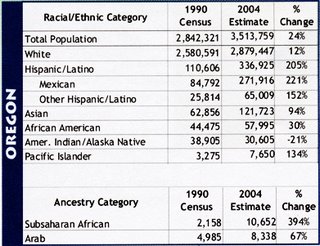
The City of Portland – indeed, all of Oregon – has grown by leaps and bounds in the last decade. The ethnic and racial makeup of the largest population centers in the state has changed dramatically, and will continue to evolve. Consider the following statistics presented at a recent TACS event.


Establishing the city’s first ever Immigrant and Refugee Task Force is a solid first step toward nurturing a culture of inclusiveness throughout the city. It’s encouraging to see that city officials are making a heartfelt and sincere effort to reach out to communities of color – native or foreign-born, immigrants or refugees.
I had an opportunity to talk with Kayse Jama, founder of Center for Intercultural Organizing, one of the core groups working toward raising awareness about unique challenges faced by immigrants and refugees in the city.
Jama credits the tireless efforts of Bridgetown Voices, a grassroots immigrant and refugee-led collaboration empowering immigrants and refugees throughout the region. Volunteers have collaborated to develop a unified voice, advocate for their rights, and create an environment in which they are recognized and supported as valued residents of our city. The group’s work has been instrumental in bringing about the City of Portland Immigration Resolution, essentially “a progressive position on federal immigration reform, acknowledging the need for a realistic and comprehensive approach that provides a path to citizenship, addresses the immigration backlog to unify families, and provides a safe, legal and orderly avenue for migrant workers to enter the U.S. and benefit from worker protections.”
There’s a lot of work that needs to be done, but Portland is a city rich with people who come from various cultural and ethnic pasts and presents. There’s a lot of vitality among the diverse communities that call Portland their home. For example, Cambodian-Americans in Oregon are a flourishing civic force – a well-organized and close-knit group of volunteers have helped the Cambodian-American Community of Oregon achieve many accomplishments in such a short period of time.

CACO is a volunteer-driven organization whose primary mission is to provide opportunities for Cambodian-American youths and their families. Members maintain close ties to their native Cambodia, and do much to give back. Success of CACO in drumming up support for various programs has drawn the attention of foundations and grants programs, including the Asian Reporter Foundation. Volunteer-led efforts have been successful at lending a helping hand serve hundreds of needy children in Cambodia and supplying soccer uniforms to Afghanistan. In 2006, community members also helped advocate for a child of Cambodian refugees who, because of cultural barriers and misunderstandings, was taken away from her family and placed in a foster home.

Attending the group’s fourth annual Khmer Heritage Night, it’s easy to see why the community has come a long way from the trials they endured under the oppressive Khmer Rouge regime. Kilong Ung, president, summed up the core strength of the community in an e-mail to community members thanking them for another successful year: “You are not alone because you are part of the community which is made up of people who care. There is nothing we cannot do as a community; lean on one another.”

There is wisdom in that sentiment for all who call Portland home – regardless of race, ethnic background and socioeconomic status. The work ahead involves forging alliances and partnerships across many cultures, seeing the big picture of the wayforward for the City of Portland. In my opinion, the goal is to establish a solid foundation upon which we can build confidence across all communities, so we may nurture relationships that are respectful, personal, trusting and more importantly, accountable.

Pictured below, Mayor Tom Potter and wife Karin present the Khmer Heritage Month proclamation to the Cambodian-American Community of Oregon. In the background are Sinou Tauch and Kilong Ung.


Popular posts from this blog

Enlighten Me

Editor's Note: This review was originally published in Los Angeles Book Review . Author Minh Lê Standing up for oneself seems like doing the right thing. Binh did just that in the face of a racist school bully who was poking fun at his Asian heritage. But physically assaulting another student goes against school policy, and it was Binh who got in trouble. Binh shares a silent retreat with his family and younger siblings. Along with other children, he learns about stories from the previous lives of the Buddha. The stories are interesting, but for Binh, it is difficult to sit still and clear his mind when he misses his Gameboy. While he struggles with silence, he learns important lessons about friendship, community, and being present. In the graphic novel "Enlighten Me," award-winning author Minh Lê and bestselling illustrator Chan Chau tell the story of a boy who gains a better understanding of himself as he works on quieting the mind and reflecting on dharma. Lê and Ch...

Slow Down: The Degrowth Manifesto

In "Slow Down: The Degrowth Manifesto," renowned Marxian scholar and philosopher Kohei Saito offers a compelling argument against the relentless pursuit of economic growth that permeates contemporary capitalism. Saito’s thesis focuses on the concept of degrowth—a radical reduction in production and consumption that aligns with sustainable ecological limits rather than constant expansion. Pictured above is Kohei Saito Saito makes a significant and timely contribution to the ongoing conversation about sustainable living. Slow Down adopts an interdisciplinary approach, drawing insights from environmental science, economics, and social theory to present a clear and urgent depiction of the current ecological crisis. Saito critiques the widely accepted belief that economic growth equates to progress and questions the sustainability of existing global consumption patterns. He advocates for a fundamental reshaping of our economic systems to prioritize human well-being and ecologica...

Minding the Wealth Gap

As a Black investor and startup founder, Cliff Goins IV brings firsthand experience and sharp insight to one of America’s most urgent issues: the racial wealth gap. Having navigated the worlds of finance and entrepreneurship, Goins has seen up close the systemic disparities in wealth creation, access to capital, and asset management. From unequal opportunities in homeownership and education to persistent challenges in business funding and employment, the historical gaps are perpetuated in present-day practices. In "Minding the Wealth Gap," Goins skillfully blends data, lived experience, and the insights of experts to illuminate the deep-rooted economic disparities facing Black Americans. More importantly, he highlights the power of collective uplift. Through the voices of nine dynamic “gap closers,” Goins shows how real change happens when Black investors and leaders open doors for others. Each success “play” or strategy underscores the ripple effect of support. Selena Cu...