Beyond the Edge of the Universe


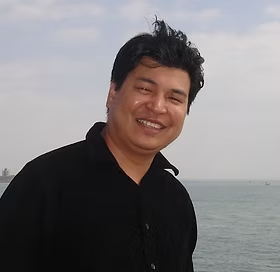
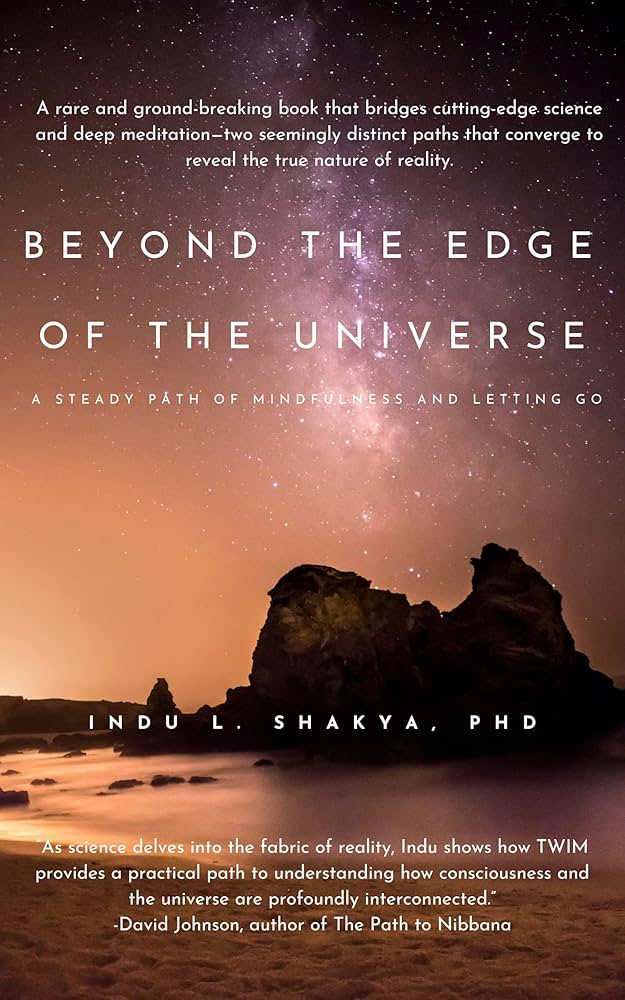
For 2,600 years, the teachings of the Buddha about mindfulness and lovingkindness have permeated many cultures and societies, often forming an important anchor for social and moral cohesion. More than ever, the lessons and practices described in the Pali canon, a collection of scriptures in the Theravada Buddhist tradition, are relevant and helpful to guide people to deal with numerous challenges in modern life. In “Beyond the Edge of the Universe: A Steady Path of Mindfulness and Letting Go,” Dr. Indu Shakya, a longtime Buddhist practitioner, scientist, and researcher, explores the intersection of the Buddha’s teachings with contemporary scientific theories about consciousness, reality, and the universe. ​Shakya centers his discourse on his experience with Tranquil Wisdom Insight Meditation (TWIM), a meditation practice based on the original teachings of the Buddha, as found in the Pali Suttas.

I was drawn to the book because of my own exploration of Buddhism from different traditions, including Thai Forest, Tibetan and Soto Zen. Even after more than 20 years of exploring the Dharma, I approach my practice with a ”beginner’s mind,” to stay open to possibilities of understanding different perspectives and deeper meaning of the original teachings of Shakyamuni Buddha. What sets this book apart is the personal reflections and awakenings offered by Shakya derived from a 10-day online retreat with David Johnson in 2017. The author presents his insights into three parts, covering topics that blend Buddhist insights with modern scientific concepts such as quantum mechanics and the nature of reality. He emphasizes the practical aspects of mindfulness and meditation as a means to experience “nibbana,” the ultimate state of peace and freedom from suffering.

This book will benefit readers who are interested in the intersection of spirituality and science. I appreciated Dr. Shakya’s critique of materialist perspectives in science, which supports views that consciousness may be more fundamental than matter. He delves into various meditative practices taught by the historical Buddha, presenting them as pathways to experiencing the true nature of the mind and reality.

One challenging aspect of the book is that it requires some prior knowledge of Buddhist teachings. However, on the plus side, Dr. Shakya writes in a reflective, engaging and insightful way, encouraging readers to explore their own experiences and understanding of reality. Shakya refers to foundational texts that have been central to our modern understanding of Buddhism. He offers clear and concise explanations, making complex concepts accessible to readers who do not have a lot of exposure to Buddhist philosophy and practices, ensuring that everyone can benefit from his insights.

Editor's Note: This review was originally published on Reedsy Discovery.
Popular posts from this blog

Lucky Tomorrow: Stories

Deborah Jiang-Stein's debut collection of short stories explores the lives of people who are often overlooked. From flower street vendors to families torn apart by ambition, to a woman on death row awaiting redemption amidst a tumult of memories, Jiang-Stein vividly depicts their struggles. Each story is set in various cities where she has lived: Seattle, Minneapolis, and Tokyo. While these settings differ, they share a common indifference toward human suffering. In "Lucky Tomorrow, " each vignette offers a glimpse into harsh realities that are often difficult to confront, yet are grounded in the lived experiences of those frequently unseen and cast aside. The stories convey powerful themes of longing and fleeting hopes for fresh starts that may never arrive. Although the themes are specific to the characters, they resonate with the universal human experience. As an activist and advocate, Jiang-Stein has made a significant impact through her extensive work with women...

Medicine Wheel for the Planet

Jennifer Grenz, PhD       Working toward ecological healing requires awareness of how Indigenous ancestral knowledge and living ways can complement Western scientific approaches to environmental restoration and protection practices. Dr. Jennifer Grenz (Nlaxa’pamux mixed ancestry) worked for more than two decades as a field researcher and practitioner for environmental nonprofit organizations, where she worked with different levels of government, including First Nations in Canada. "Medicine Wheel for the Planet" compiles Grenz’s most potent realizations about the lack of forward movement in addressing an impending ecological catastrophe.  A warming climate impacts not only human lives but also the natural balance that relies on reciprocal relationships rooted in deep connections to the land. She uses the metaphor of the four directions of the Indigenous “medicine wheel” to invite openness to Indigenous teachings, letting go of colonial narratives, merging lessons f...

Memento - Embracing the Darkness

Dennis "Dizzy" Doan Stories about overcoming and persevering through family dysfunction, poverty, and mental health challenges offer hope and the promise of better days. Dennis “Dizzy” Doan’s memoir Memento: Embracing the Darkness is one such story, with the added complexity of being raised in an immigrant Vietnamese family. Doan’s parents dealt with the mental and emotional aftermath of war, which forcibly uprooted them from their homeland. In the United States, they struggled to create a safe and stable life for their two sons. Doan shares his journey of finding himself, his craft, and eventually a successful tattoo business in Southern California despite personal strife and run-ins with the law. Doan is best known for developing the aesthetic language to combat anti-Asian hate that erupted during the COVID-19 pandemic. His art series titled “Model Minority” went viral, sparking conversation about Asian American identities and harmful stereotypes. In Memento, Doan showcase...