
Kwesi and Nana Ruby Learn to Swim


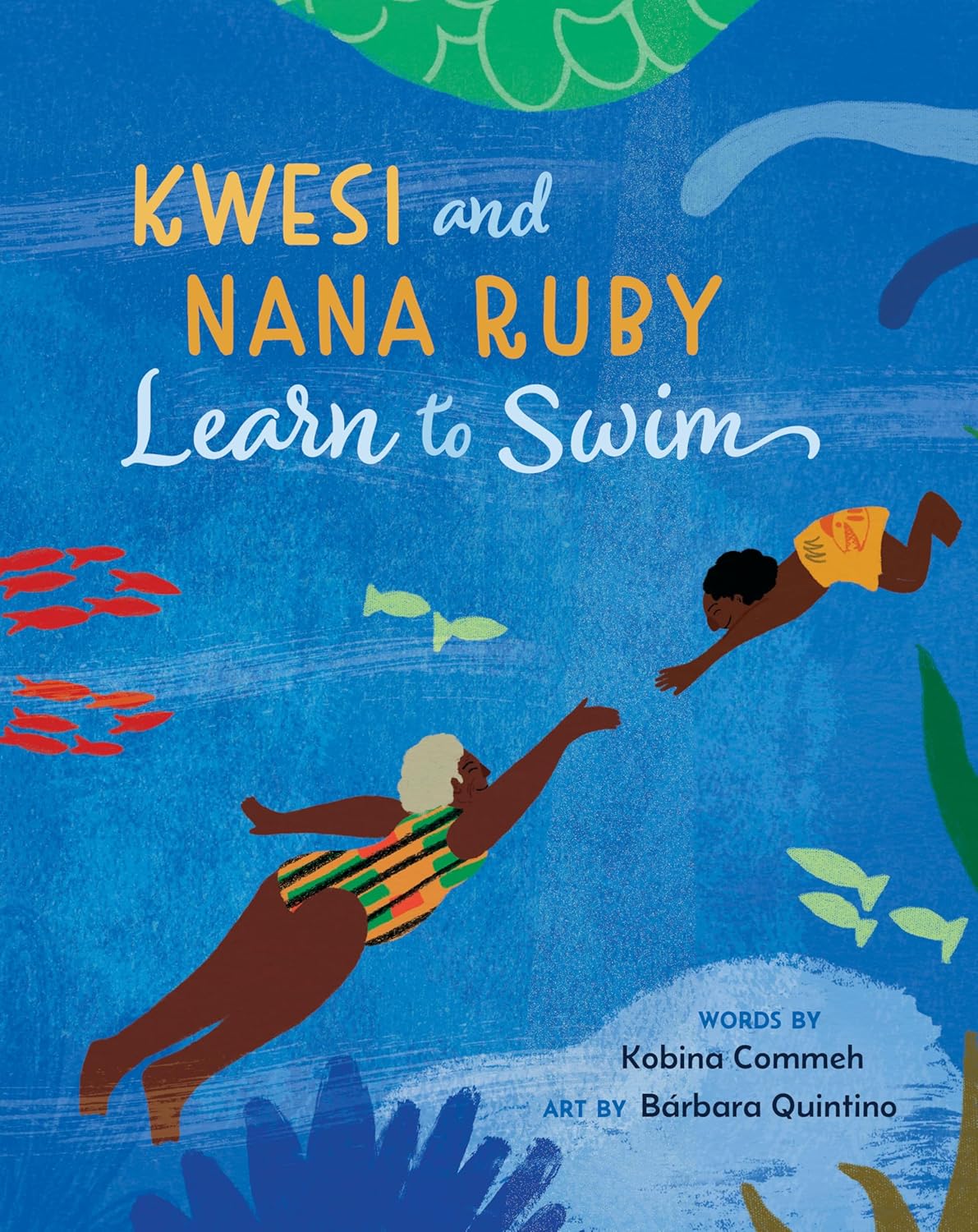
Kwesi could not find comfort in the swimming pool. While other children played and enjoyed themselves, Kwesi had never learned how to swim. During a game of oware, Nana (his grandmother) noticed that something was bothering him. Kwesi admitted that he felt sad about not being able to swim.

Nana then told him about the water spirit Mami Wata, a symbol of strength and nurturing in West Africa. Inspired by this newfound knowledge, Kwesi became determined to conquer his fear of the water, with Nana by his side for support.

Writer Kobina Commeh shares a poignant story of resilience and courage across generations in the picture book Kwesi and Nana Ruby Learn to Swim. Inspired by his childhood in Ghana, where he encountered tales of Mami Wata, a half-woman, half-fish figure, Commeh sheds light on the painful history of racial segregation in the United States that prevented many generations of Black Americans from learning to swim. Brazilian illustrator Barbara Quintino beautifully brings the story of Kwe-Kwe and Nana to life through her art. This collaboration reinforces the diasporic themes explored in the book, which aims to help children understand history, instill pride in their heritage, and overcome challenges.

Editor's Note: This review was originally published in Chicago Book Review.
Popular posts from this blog

Lucky Tomorrow: Stories

Deborah Jiang-Stein's debut collection of short stories explores the lives of people who are often overlooked. From flower street vendors to families torn apart by ambition, to a woman on death row awaiting redemption amidst a tumult of memories, Jiang-Stein vividly depicts their struggles. Each story is set in various cities where she has lived: Seattle, Minneapolis, and Tokyo. While these settings differ, they share a common indifference toward human suffering. In "Lucky Tomorrow, " each vignette offers a glimpse into harsh realities that are often difficult to confront, yet are grounded in the lived experiences of those frequently unseen and cast aside. The stories convey powerful themes of longing and fleeting hopes for fresh starts that may never arrive. Although the themes are specific to the characters, they resonate with the universal human experience. As an activist and advocate, Jiang-Stein has made a significant impact through her extensive work with women...

Medicine Wheel for the Planet

Jennifer Grenz, PhD       Working toward ecological healing requires awareness of how Indigenous ancestral knowledge and living ways can complement Western scientific approaches to environmental restoration and protection practices. Dr. Jennifer Grenz (Nlaxa’pamux mixed ancestry) worked for more than two decades as a field researcher and practitioner for environmental nonprofit organizations, where she worked with different levels of government, including First Nations in Canada. "Medicine Wheel for the Planet" compiles Grenz’s most potent realizations about the lack of forward movement in addressing an impending ecological catastrophe.  A warming climate impacts not only human lives but also the natural balance that relies on reciprocal relationships rooted in deep connections to the land. She uses the metaphor of the four directions of the Indigenous “medicine wheel” to invite openness to Indigenous teachings, letting go of colonial narratives, merging lessons f...

Memento - Embracing the Darkness

Dennis "Dizzy" Doan Stories about overcoming and persevering through family dysfunction, poverty, and mental health challenges offer hope and the promise of better days. Dennis “Dizzy” Doan’s memoir Memento: Embracing the Darkness is one such story, with the added complexity of being raised in an immigrant Vietnamese family. Doan’s parents dealt with the mental and emotional aftermath of war, which forcibly uprooted them from their homeland. In the United States, they struggled to create a safe and stable life for their two sons. Doan shares his journey of finding himself, his craft, and eventually a successful tattoo business in Southern California despite personal strife and run-ins with the law. Doan is best known for developing the aesthetic language to combat anti-Asian hate that erupted during the COVID-19 pandemic. His art series titled “Model Minority” went viral, sparking conversation about Asian American identities and harmful stereotypes. In Memento, Doan showcase...