
Sikodiwa: Revisiting Indigenous Filipino Wisdom


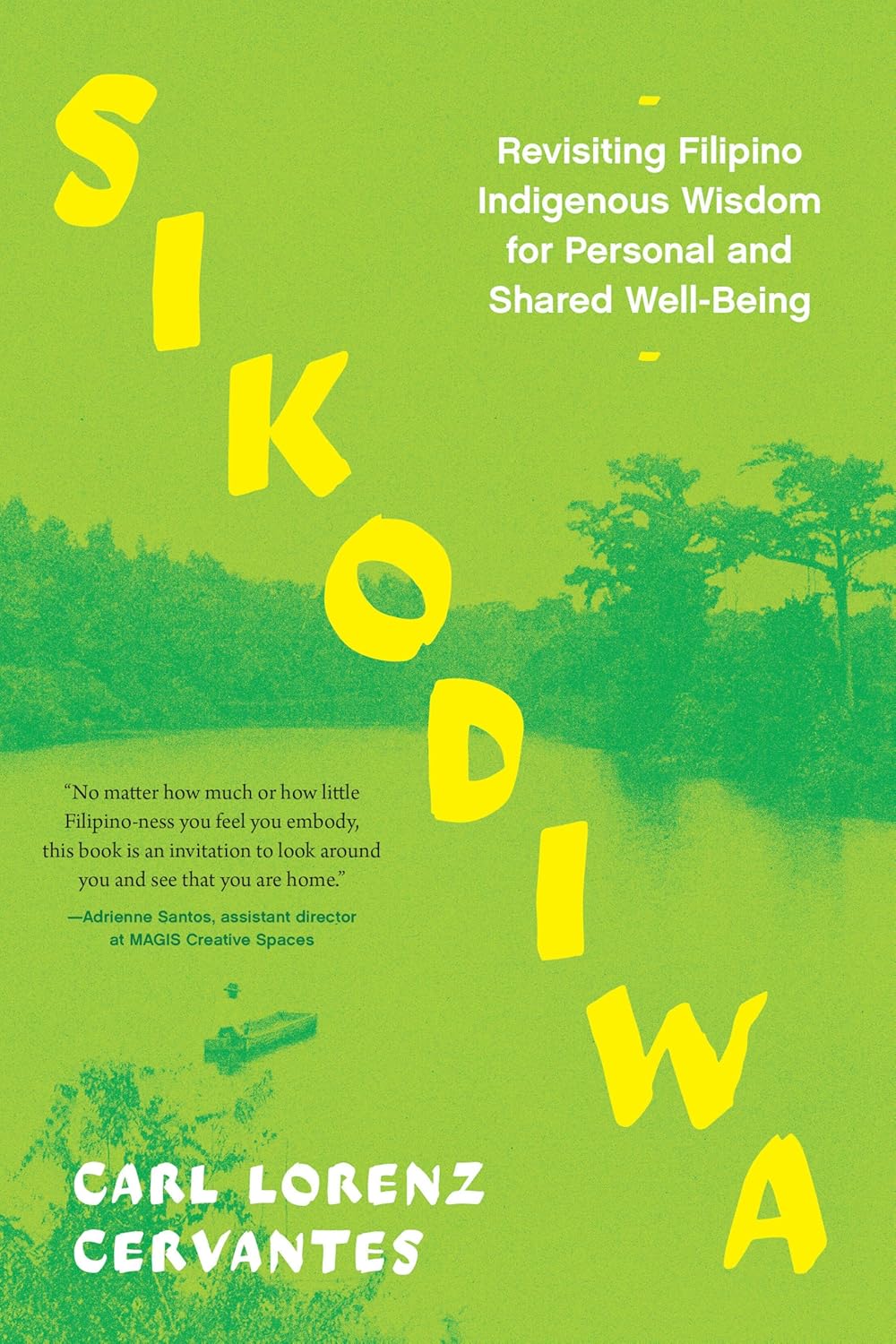
The belief and value systems among the Filipino people are rich with meaning, shaped by history, and passed on generation after generation through stories and traditions, both in the homeland and the vast global diaspora. Researcher and educator Carl Lorenz Cervantes brings to light the ancestral worldviews and spiritual wisdom that Filipinos have carried with them to overcome the harms of colonization, to thrive with gratitude and resilience, and to be ready to face new challenges. In today’s context, Cervantes's Sikodiwa is a timely exploration of Filipino psychology, the process of decolonization, and the path toward Indigeneity.

Cervantes, a university professor and social media influencer, has a dedicated following among Filipino Americans. I’ve learned about his work from FilAms who are on the journey of rediscovering their heritage and looking for ways to embody Filipino values. In Sikodiwa, Cervantes presents his journey and work, while also paying homage to the works of pre-eminent scholars of Filipino decolonial studies, including Fr. Alberto Alejo, Virgilio F. Enriquez, Katrin De Guia, Zeus Salazar, among others.

What I appreciated about this book is Cervantes’ careful attention to explaining concepts in the Tagalog language, never assuming that readers already have a basic grasp of concepts like “kapwa” (shared sense of self) and “loob” (interior self). Sikodiwa is an excellent read for anyone who is intent on deepening their understanding of Indigenous lifeways, offering a wealth of knowledge and insights.

Editior's Note: This review was originally published in Seattle Book Review.
Buy from Capital Books

Popular posts from this blog

Minding the Wealth Gap

As a Black investor and startup founder, Cliff Goins IV brings firsthand experience and sharp insight to one of America’s most urgent issues: the racial wealth gap. Having navigated the worlds of finance and entrepreneurship, Goins has seen up close the systemic disparities in wealth creation, access to capital, and asset management. From unequal opportunities in homeownership and education to persistent challenges in business funding and employment, the historical gaps are perpetuated in present-day practices. In "Minding the Wealth Gap," Goins skillfully blends data, lived experience, and the insights of experts to illuminate the deep-rooted economic disparities facing Black Americans. More importantly, he highlights the power of collective uplift. Through the voices of nine dynamic “gap closers,” Goins shows how real change happens when Black investors and leaders open doors for others. Each success “play” or strategy underscores the ripple effect of support. Selena Cu...

Slow Down: The Degrowth Manifesto

In "Slow Down: The Degrowth Manifesto," renowned Marxian scholar and philosopher Kohei Saito offers a compelling argument against the relentless pursuit of economic growth that permeates contemporary capitalism. Saito’s thesis focuses on the concept of degrowth—a radical reduction in production and consumption that aligns with sustainable ecological limits rather than constant expansion. Pictured above is Kohei Saito Saito makes a significant and timely contribution to the ongoing conversation about sustainable living. Slow Down adopts an interdisciplinary approach, drawing insights from environmental science, economics, and social theory to present a clear and urgent depiction of the current ecological crisis. Saito critiques the widely accepted belief that economic growth equates to progress and questions the sustainability of existing global consumption patterns. He advocates for a fundamental reshaping of our economic systems to prioritize human well-being and ecologica...

A Beginner’s Guide to the Roots of Yoga

The modern practice of yoga in Western culture is often criticized for disconnecting from its cultural, historical, and spiritual roots. In many studios and gyms, yoga is reduced to a fitness routine—focused on stretching rather than its original purpose of enlightening the mind. In "A Beginner’s Guide to the Roots of Yoga," celebrated practitioner Nikita Desai reconnects readers with yoga’s ancient Indian origins. Drawing on her Indian heritage, Desai explores the deeper meanings behind yoga’s forms, postures, and intentions, offering a rich historical and philosophical context for those seeking a more authentic practice. Desai shares her personal journey of reclaiming yoga’s essence, inviting readers to do the same by integrating cultural awareness into their practice. Her tone is welcoming and nonjudgmental, making the book accessible to readers of all backgrounds. Although I do not practice yoga, my meditation roots lie in Zen Buddhism. Through conversations with prac...