
The Home Within


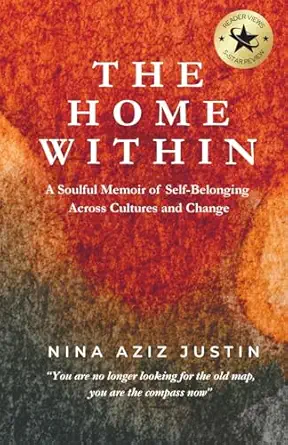
The experience of uprooting from one's homeland is both transformative and cathartic. Finding a sense of belonging can be elusive, yet embracing such change requires remarkable courage and wisdom. The Home Within by Nina Aziz Justin is a soulful memoir that explores themes of identity, belonging, resilience, and self-discovery across cultures and life transitions.

Divided into three parts—The Departure, The Becoming, and The Return—the book chronicles the author's journey from childhood in Malaysia to life across continents, including England, Germany, the Netherlands, and France. It delves into her experiences as a migrant, mother, entrepreneur, and advocate, examining her multifaceted identity shaped by Malaysian roots, Muslim faith, and life as a global citizen.

Through personal stories, cultural insights, and philosophical musings, Justin navigates the complexities of migration, motherhood, and self-reinvention with grace. She emphasizes resilience, self-compassion, and the courage to embrace change. Justin's entrepreneurial spirit shines through her exposition of pivotal moments of self-discovery, skillfully tying life lessons to neuroscience, psychology, and Eastern wisdom.

From my own lens as an immigrant woman of color, I relished this memoir as a celebration of multiplicity, a testament to how identity forms as a mosaic of experiences, relationships, and memories. The author's artful and vulnerable offering resonated deeply, inspiring me to reflect upon my own journey from the Philippines to the United States. I embraced Justin's call for a "home within": that vital sanctuary of self-acceptance and authenticity we must cultivate within ourselves. Her story speaks to anyone navigating personal growth, identity, and belonging. Those seeking to understand others' experiences will find inspiration and empathy for the universal struggle to cultivate resilience and a sense of belonging in unfamiliar contexts.

I particularly appreciated learning about the concept of "Amanah" -- sacred trust and responsibility -- rooted in Malay Muslim tradition. Amanah teaches that life is a gift to safeguard with care and integrity, and that self-awareness deepens this responsibility. For those living across borders, Justin emphasizes that Amanah takes on profound meaning: every migration and identity shift becomes an offering we can share with others, transforming both joy and pain into wisdom.
Buy the book

Popular posts from this blog

Minding the Wealth Gap

As a Black investor and startup founder, Cliff Goins IV brings firsthand experience and sharp insight to one of America’s most urgent issues: the racial wealth gap. Having navigated the worlds of finance and entrepreneurship, Goins has seen up close the systemic disparities in wealth creation, access to capital, and asset management. From unequal opportunities in homeownership and education to persistent challenges in business funding and employment, the historical gaps are perpetuated in present-day practices. In "Minding the Wealth Gap," Goins skillfully blends data, lived experience, and the insights of experts to illuminate the deep-rooted economic disparities facing Black Americans. More importantly, he highlights the power of collective uplift. Through the voices of nine dynamic “gap closers,” Goins shows how real change happens when Black investors and leaders open doors for others. Each success “play” or strategy underscores the ripple effect of support. Selena Cu...

Slow Down: The Degrowth Manifesto

In "Slow Down: The Degrowth Manifesto," renowned Marxian scholar and philosopher Kohei Saito offers a compelling argument against the relentless pursuit of economic growth that permeates contemporary capitalism. Saito’s thesis focuses on the concept of degrowth—a radical reduction in production and consumption that aligns with sustainable ecological limits rather than constant expansion. Pictured above is Kohei Saito Saito makes a significant and timely contribution to the ongoing conversation about sustainable living. Slow Down adopts an interdisciplinary approach, drawing insights from environmental science, economics, and social theory to present a clear and urgent depiction of the current ecological crisis. Saito critiques the widely accepted belief that economic growth equates to progress and questions the sustainability of existing global consumption patterns. He advocates for a fundamental reshaping of our economic systems to prioritize human well-being and ecologica...

A Beginner’s Guide to the Roots of Yoga

The modern practice of yoga in Western culture is often criticized for disconnecting from its cultural, historical, and spiritual roots. In many studios and gyms, yoga is reduced to a fitness routine—focused on stretching rather than its original purpose of enlightening the mind. In "A Beginner’s Guide to the Roots of Yoga," celebrated practitioner Nikita Desai reconnects readers with yoga’s ancient Indian origins. Drawing on her Indian heritage, Desai explores the deeper meanings behind yoga’s forms, postures, and intentions, offering a rich historical and philosophical context for those seeking a more authentic practice. Desai shares her personal journey of reclaiming yoga’s essence, inviting readers to do the same by integrating cultural awareness into their practice. Her tone is welcoming and nonjudgmental, making the book accessible to readers of all backgrounds. Although I do not practice yoga, my meditation roots lie in Zen Buddhism. Through conversations with prac...