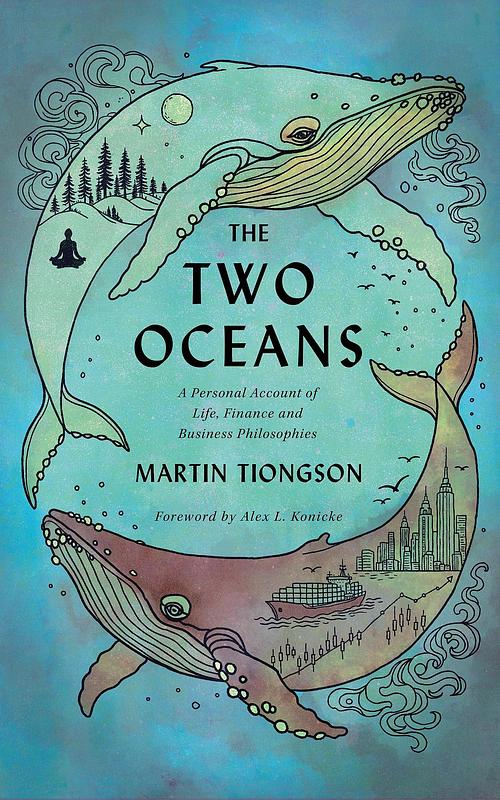
"The Two Oceans" by Martin Tiongson is a thoughtful blend of memoir, philosophy, and practical guidance on life, finance, and business. Through a series of personal stories—ranging from fostering a timid cat to navigating business negotiations and financial setbacks—Tiongson explores universal themes of resilience, self-discovery, and the search for meaning. Drawing inspiration from Stoicism, Zen Buddhism, and Jungian psychology, he reflects on the importance of mindfulness, balance, and embracing change as tools for navigating everyday challenges and persevering through adversity.
The book's title symbolizes the balance between inner and outer worlds, consciousness and the unconscious, and the interplay of opposites such as yin and yang. Tiongson writes that he was inspired by the image of two whales circling each other as he set out to chronicle his personal journey toward self-discovery, harmony, and temperance. Grounded by emotional support from family and friends, he weaves accessible financial wisdom throughout the narrative, offering practical strategies for investing, budgeting, and risk management.
As a Filipino-American, I was immediately drawn to the book because Tiongson's surname had a familiar ring. Indeed, the author's roots trace back to Manila, Philippines, which is also my hometown. His reflections on migrant experience resonate deeply with the broader Filipino diaspora, capturing the delicate balance between longing for home and pursuing opportunity abroad. His narrative highlights distinctly Filipino values, such as kindness, resourcefulness, and the sustaining power of community. He explores how migration and cultural hybridity shape an ongoing journey of self-discovery without severing deep connections to heritage.
What is particularly disarming about Tiongson's approach is his humble, relatable voice, which invites readers to find value in everyday moments and approach both adversity and opportunity with curiosity and composure. The Two Oceans functions simultaneously as a guide and a companion for anyone seeking to navigate the complexities of modern life with greater awareness and intention. It is a calm, reflective journey that encourages readers to look both outward and inward, discovering meaning in the ordinary and extraordinary alike.
While my initial connection to the book stemmed from shared cultural identity, The Two Oceans speaks to a much broader audience. Readers interested in personal growth, philosophy, entrepreneurship, and practical life wisdom will find Tiongson's seamless blending of personal storytelling and philosophical insight both engaging and rewarding. He reminds us that the most meaningful journeys often begin within.
Editor's Note: This book review was originally published in Reedsy Discovery.