
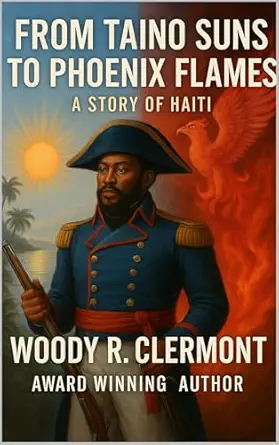
Understanding the nature of conflict and the roots of resistance is critical to developing the resolve for change. Looking at the vibrant legacy of the Haitian people – with strong Indigenous and African foundations – Woody R. Clermont’s From Taino Suns to Phoenix Flames: A Story of Haiti offers a comprehensive exploration of Haiti’s history, culture, and resilience.
The book begins with the Taíno people, the island’s Indigenous inhabitants, highlighting their rich cosmology, agricultural innovations, and spiritual traditions before European colonization. It delves into the brutal impact of the arrival of Columbus and colonialism, including genocide, slavery, and exploitation, while exposing the hypocrisy of ideals that excluded non-Europeans. The narrative then transitions to the Haitian Revolution. The book examines Haiti’s post-independence struggles, including internal divisions, foreign interference, and the crippling indemnity debt imposed by France. It also highlights Haiti’s role in global liberation movements and influencing abolitionist thought.
In my lifelong journey of decolonizing from the harmful legacy of empire, I was eager to learn about the Indigenous inheritance of the Taino people and how the enslaved Africans brought their cultural and spiritual traditions to the Caribbean. Despite the brutal attempts of the enslavers to erase their identities, they preserved their languages, cosmologies, and ancestral knowledge. This resonates deeply with my understanding of how my own (Filipino) people withstood centuries of subjugation. To rise above and overcome oppression, enslaved and colonized people must resolutely maintain our connection to our ancestral traditions and cultural practices as a source of healing, unity, and resistance.
Clermont's vast knowledge of Haitian history and genuine concern for its people shine through on every page, offering readers powerful lessons about reclaiming narratives from colonial perspectives. His work goes beyond mere historical documentation, as it actively challenges Western-centered accounts of the past and demonstrates how colonized peoples can tell their own stories on their own terms.
Haiti's revolutionary legacy is punctuated by the world's first successful slave revolt. Clermont shows readers what true decolonization looks like: the restoration of dignity, agency, and voice to those whose histories have been silenced or distorted by colonial powers. For modern readers grappling with ongoing issues of cultural dominance and historical erasure, “From Taino Suns to Phoenix Flames” provides a compelling blueprint for how marginalized communities can actualize true liberation.
 |
| Buy the book |